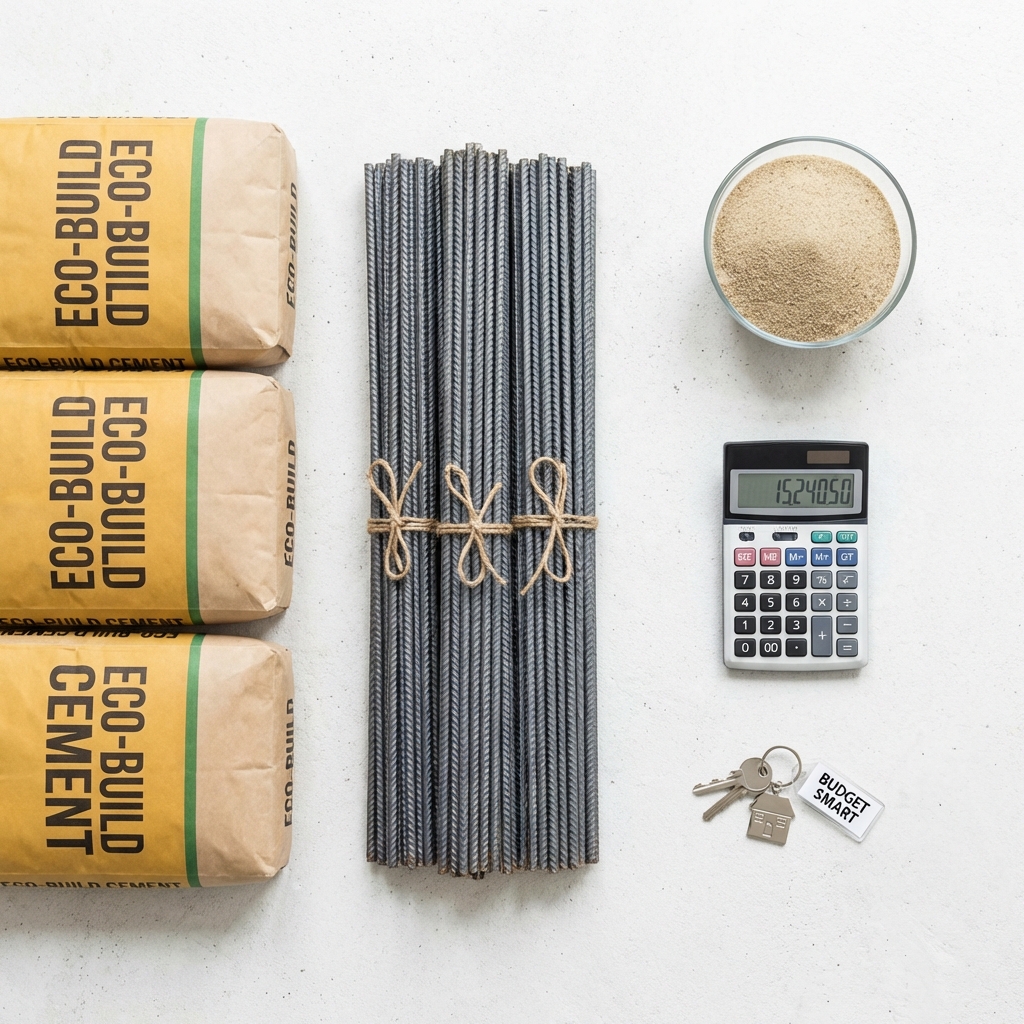
Wasted sand, cement and bricks quietly add up on every house. Learn how ordering in whole units, storing correctly and taking stage-wise delivery helps Tenkasi homeowners and contractors avoid leftovers and losses.
Where material actually gets wasted
Most site waste is not theft or bad luck but small, repeated habits. Sand mixes with mud when dumped on bare ground. Cement bags absorb damp from the floor and harden into lumps. Bricks and blocks break when thrown from a vehicle instead of stacked. Mortar is mixed in bigger batches than the masons can use before it sets. Over-ordering at the start leaves surplus that gets spoiled by rain or taken away. Walk your site once a week and note what is being lost, because you can only fix waste you have seen.
Order in whole units, not guesses
Sand, aggregate and gravel are sold in loads or units, and bricks and blocks in counts, so ordering exactly the figure you calculated leaves a part-load that has to be topped up or stored for weeks. Start from a proper estimate with our construction material calculator, then round the order sensibly to the delivery unit. Include a small allowance for breakage and spillage as your engineer advises, but do not pad it heavily. If the estimate lands just above a whole load, check whether trimming a specific item or adjusting the mix plan can bring it down before ordering extra.
Take delivery in stages
Do not bring everything on day one. Order the footing aggregate and cement for the foundation first, then walling material when plinth is ready, then plaster sand and flooring material later. Stage-wise delivery keeps the plot free for work, reduces theft and weather risk, and spreads your cash flow. It also lets you correct course if the design changes midway. Our delivery trip planner can help you schedule loads against your construction stages, and our building material rate checker is where you can confirm current prices before each stage, subject to availability.
Store each material properly
Keep cement bags on a raised wooden platform, away from walls, stacked in short piles and covered, and use older bags first. Put sand and aggregate on a hard base or on sheets, with a bund around the edge to stop runoff. Stack bricks and blocks neatly in rows on firm ground so that handling does not break them. Keep steel off the soil on supports and covered. Assign someone to check stocks at the end of each week, and keep a simple notebook of what came in and what was used.
Reuse and track what is left
Use broken bricks for filling, small gravel for sump bases or path edges, and spare mortar sand for plinth protection. Mix mortar in small batches so it is used within its setting time. Compare what was ordered with what the estimate said you would use at the end of each stage. A large gap shows a leak, an over-order or a calculation error. Our construction cost guide gives a useful reference for the proportions of each material, so you can see early if one item is running well beyond plan.
Conclusion
Less waste comes from three habits: calculate first, order in whole delivery units, and take material stage by stage. Add proper storage and a weekly stock check, and most leftovers and losses disappear. Always compare actual use against your estimate. Call or WhatsApp +91 76676 66264 with your estimate for delivered rates, and we will help you schedule loads that match your building stages.
Reviewed by the TKR team. See our editorial policy for how guides are written, checked and updated.