Gravel, kundu kal and blue metal look similar in a heap but do different jobs. This guide explains which one suits filling, soling, PCC and roads so you buy the right stone for each task.
Three materials, three jobs
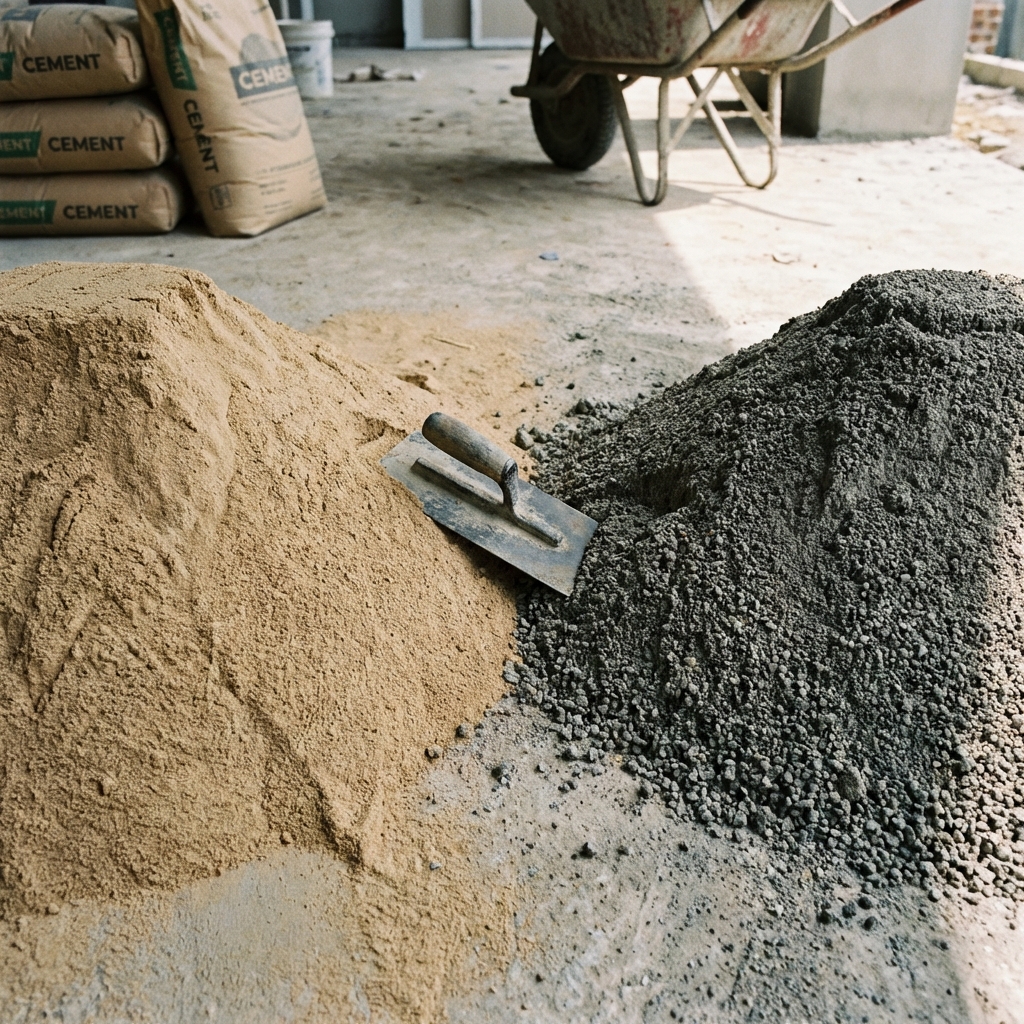
Gravel, kundu kal and blue metal are often mixed up because all three are stone. They are not interchangeable. Gravel, called saral kraval locally, is a loose mix of stone pieces and earthy fines that packs down well and is used mainly for filling. Kundu kal is rounded stone used for soling, which is the hand-packed stone layer under foundations and floors. Blue metal is crushed granite in sizes such as 12 mm, 20 mm and 40 mm, with sharp angular faces, and it is the coarse aggregate for concrete. Choosing by job rather than by look avoids both overspending and weak work.
Gravel for filling and levelling
Gravel is the economical choice when you need to raise a plot, fill a plinth, level a yard or build a base for a path. Because it contains fines, it compacts into a firm bed when spread in layers, wetted and rammed or rolled. It should not go into structural concrete, since the fines and the soft particles reduce strength. Gravel is also used as a sub-base on rural roads and tracks. Fill in layers of limited thickness and compact each layer rather than dumping the full depth at once, because uncompacted fill settles later and cracks the floor above it.
Kundu kal for soling
Kundu kal is the stone you see packed tightly under floors and foundations. Its rounded, hard shape lets workers pack it in a close bed, with gaps filled by smaller stone or sand, to give a firm base before PCC or the floor slab. Soling also helps spread load and cut off damp rising from the ground. The exact depth and size should come from your engineer or site plan, because they depend on soil and the load above. It is not a substitute for blue metal in concrete, since concrete needs graded, angular aggregate that locks together.
Blue metal for PCC and RCC
Blue metal is the aggregate that gives concrete its strength. Plain cement concrete under footings often uses 20 mm and 40 mm sizes, while reinforced members such as columns, beams and slabs generally use 20 mm and smaller sizes because bars are closely spaced. The right size and mix for each member are set by the engineer. What you control is the quality of the supply: clean, hard, angular stone with few flakes and little dust. Dusty aggregate coats the stone and weakens the bond with cement. Order a sample handful first if you are unsure about the grade.
Roads, driveways and farm tracks
For a driveway or farm track, a common build-up uses compacted gravel as the base and blue metal on top for a more durable wearing surface, with the depth depending on traffic and soil. Heavy tractors and tippers need a thicker, well-drained base than a footpath. Good drainage matters as much as the stone itself, because water in the base is what breaks a road in the monsoon. Slope the surface so water runs off, and avoid low spots near tank bunds and fields. Keep heavy vehicles off newly laid layers until they are compacted.
Choosing and ordering
Tell us the job rather than only the material name, and we can suggest which stone fits. Quote the number of units from our construction material calculator, and check current rates on our building material rate checker, since these are subject to availability and reconfirmation. Ask us about the delivery area, because our service is aimed at sites within about 30 km of the Ilanji yard, and availability is always confirmed at the time of order. If you are mixing your own concrete, also read our guide to choosing construction aggregates for more on grades and sizes. A short call before you order can save you from buying a heap of the wrong stone, which is costly to return and awkward to reuse.
Conclusion
Use gravel for filling, kundu kal for soling and blue metal for concrete, and confirm depths and sizes with your engineer. Buying the right stone for the right layer is the cheapest way to avoid rework. Describe the job to us and we will suggest the right stone. We can also advise on how many units your job needs. Call or WhatsApp +91 76676 66264 for delivered rates.
Reviewed by the TKR team. See our editorial policy for how guides are written, checked and updated.