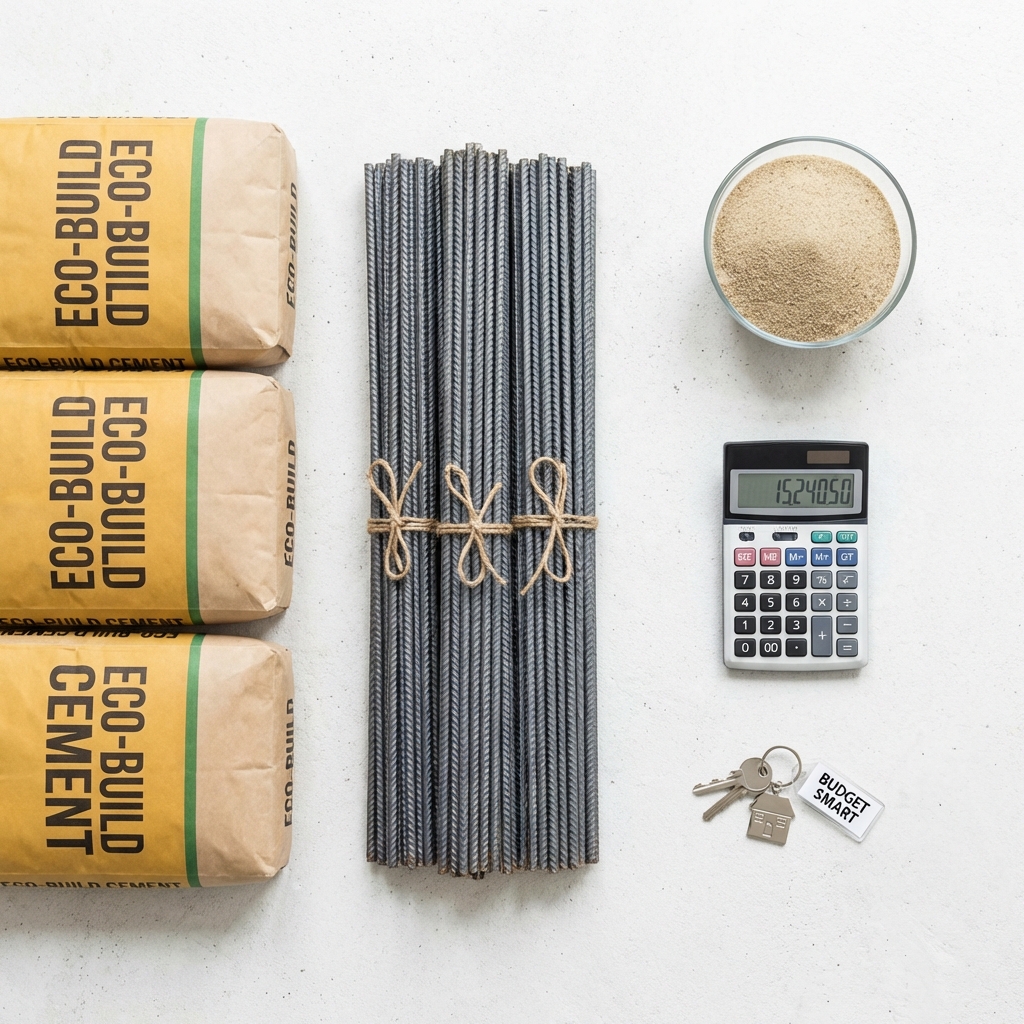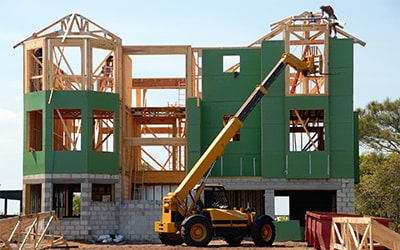
A common thumb rule for a 1,000 sq ft RCC house is about 18 units of M-Sand for concrete and masonry. Here is how to use it, what changes it, and how to order without running short in Tenkasi.
The thumb rule in one line
For a standard RCC-framed house of 1,000 sq ft, builders in Tamil Nadu commonly plan on about 18 units of M-Sand for concrete and masonry work. One unit is 100 cubic feet, so 18 units is about 1,800 cubic feet. Divide that by the built-up area and you get roughly 1.8 cubic feet of M-Sand for every square foot you build. This number covers footings, columns, beams, the roof slab and block or brick masonry. It does not include plastering sand, which is a separate material and is usually ordered as P-Sand. Treat the figure as a planning number for budgeting and for deciding how many loads to expect, not as a final order quantity.
Where the sand actually goes
M-Sand is used in two main places. The first is structural concrete, where it is the fine aggregate mixed with cement and blue metal for footings, columns, beams and the slab. The second is masonry, where it goes into the mortar that joins blocks or bricks. Concrete takes the larger share of the total in a typical frame house, while masonry takes the rest. A design with more floors, longer spans or heavier beams pushes the concrete share up. A house with many partition walls pushes the masonry share up. This is why two houses of the same floor area can differ by several units even when both follow the same rule.
What can move the number up or down
Your engineer's drawing is the real authority. Deeper footings in soft soil, a second floor, a water tank on the roof, a sunshade on every window or a thick slab all add concrete and therefore sand. Solid or hollow blocks need less mortar than small bricks, so the masonry share drops. Wastage also matters. Plan for a few percent extra for spillage, mixing losses and sand that gets mixed into the ground at the stacking point. If your site is cramped and sand is dumped on a bare patch of soil, you lose more. Laying a tarpaulin or a thin concrete pad under the heap saves real money over a whole build.
Moisture and bulking when you measure
Sand volume is not constant. Damp sand occupies more space than dry sand because water films hold the grains apart, an effect called bulking. If your mason measures sand in a bucket or box by volume for each batch of concrete, wet sand will contain less actual sand than the box suggests, and the mix can come out leaner than intended. The fix is to tell the mason the sand is damp, and to follow the engineer's mix instructions on whether to adjust the volume. This does not change how many units you order from the yard, but it explains why a site can run out sooner than the paper calculation suggests.
Ordering in loads of 4 units
Sand is usually delivered in vehicles that carry about 4 units. For 18 units, that works out to four and a half loads, so most owners order in stages instead of all at once. A sensible plan is to match deliveries to pours: one or two loads before footing and column concreting, then more before the slab, and the remainder before block work. Staged orders keep your site tidy, reduce theft and contamination, and let you adjust if the design changes. Ask for rates and availability before each delivery, because stock and rates are subject to availability and reconfirmation.
Use the calculator before you order
Our construction material calculator on the website lets you enter the built-up area and see an estimate of cement, steel, M-Sand, P-Sand, blue metal and blocks together, so you can cross-check the 18-unit rule against your own plan. Use it as a starting point, then ask your engineer to confirm quantities from the structural drawing. For the whole-house budget, see our construction cost guide, which explains what a starting rate per square foot normally includes. It also lets you try different areas, such as 800 or 1,200 sq ft, so you can see how the sand quantity scales before you finalise the plan.
Conclusion
The 18-unit figure is a sound way to plan M-Sand for a 1,000 sq ft house, but your drawing, soil and wall material decide the final quantity. Order in stages, keep the sand off bare soil and recheck before each load. Keep a written record of every load that arrives so you can compare actual use with the estimate as work progresses. Call or WhatsApp +91 76676 66264 for delivered rates.
Reviewed by the TKR team. See our editorial policy for how guides are written, checked and updated.