You do not need a laboratory to spot poor M-Sand when the tipper arrives. These simple field checks for silt, grading, moisture and cleanliness help you catch problems before the sand goes into concrete.
Why check at the site
M-Sand is made by crushing rock, and quality varies with the source rock, the crushing process and the washing or screening that follows. A field check does not replace laboratory testing, but it can catch obvious problems at the moment of delivery, while the vehicle is still on site and a sample can be compared with what was shown to you earlier. If concrete work is large or structural, your engineer may also ask for lab tests, and you should follow that advice. The checks below are practical, quick and free, and they require only a clear jar, a bucket and your own eyes.
Look and feel first
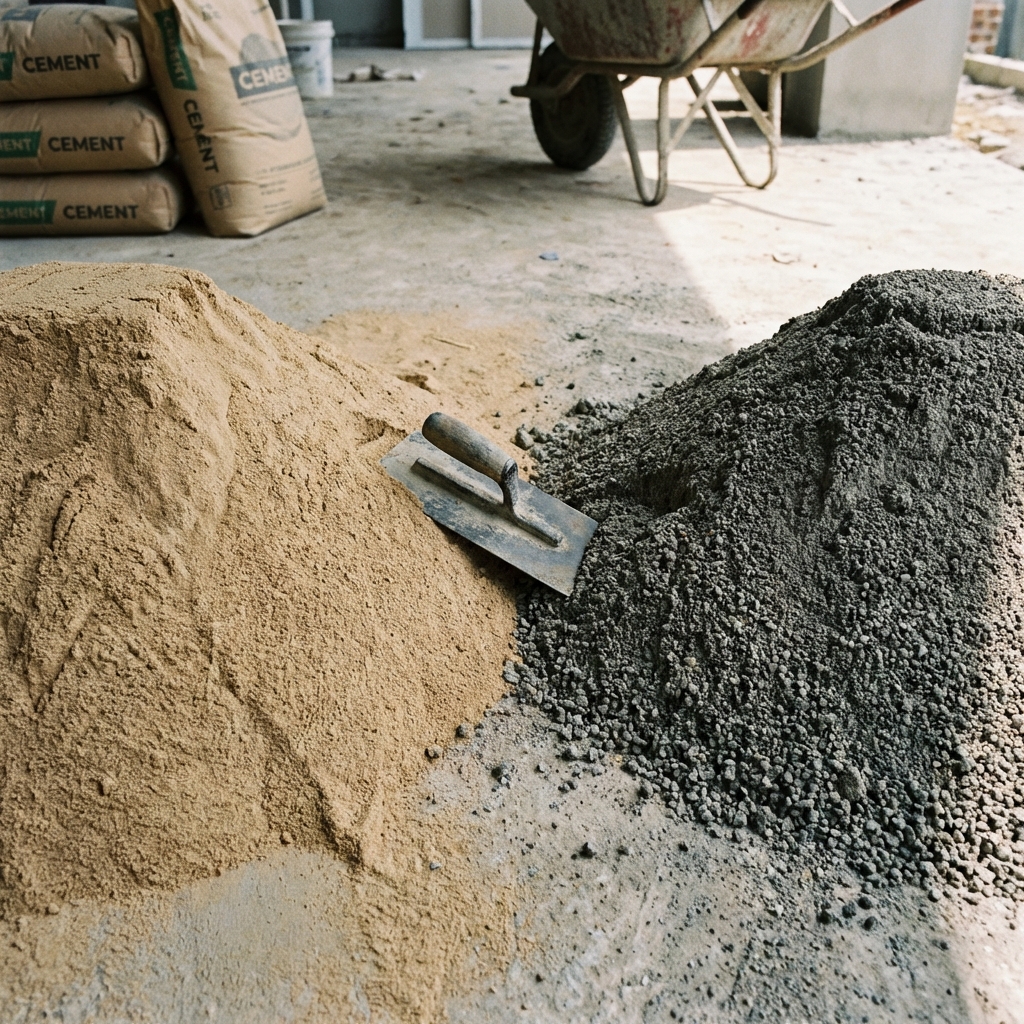
Take a handful from several places in the load, not just the top. Good manufactured sand looks fairly uniform, angular and clean, with a mix of grain sizes from fine to coarse. Rub it between your palms. If your hands come away coated with a thick layer of grey or yellow dust, the sand carries too much fine material. Sand that feels sticky or forms lumps when dry may contain clay. Sample also from the bottom of the heap, because dust sinks. Compare what you see with the sample you approved before ordering.
The silt jar test
Fill a clear glass jar about one third with sand, add clean water to near the top, shake well and leave it for a few hours. The sand settles at the bottom and any silt or clay settles in a separate layer above it. A thin film is normal for most sources. A thick layer of dirt above the sand is a warning sign, because fines of this kind coat the grains and reduce the bond between cement and sand. If the layer looks heavy, ask your engineer to review it or request washed sand. The test is only indicative, and it does not give a percentage.
Checking grading
Grading means the spread of grain sizes. Concrete and mortar both work best with a balanced mix, since the small grains fill the gaps between the larger ones. Spread a handful on white paper. If nearly every grain is the same size, or the sand is almost all fine powder or all coarse, the mix will need more cement or will turn out harsh and hard to work. A lab sieve analysis is the proper way to confirm grading, and your engineer can order one for structural work. On site, simply note whether the sand looks well mixed.
Moisture and bulking
Squeeze a handful tightly and open your hand. If it holds its shape like a ball and your palm is damp, the sand is moist. If it crumbles at once, it is nearly dry. If water drips out, it is very wet. Moisture matters in two ways. Damp sand bulks up and fools volume measurement, and wet sand brings extra water into the mix. Tell your mason or engineer the condition so they can adjust the water in the mix. Check again a few days later if the same heap stays on site, since rain can wash fines or add moisture.
What to do if you are unsure
Photograph the load, keep a sealed sample in a jar and ask for guidance before the sand goes into a pour. Our M-Sand guide explains what good manufactured sand should look like, and our construction material calculator helps you size the order. If the load clearly fails your checks, tell us right away so the matter can be sorted before you use any of it. You can also compare against our pages on M-Sand and P-Sand, which describe the typical uses of each grade. We do not claim any certification here, so for work that needs formal test reports, ask your engineer to arrange testing through an approved laboratory and keep the reports with your project file. That record also helps if a question ever arises about the concrete later.
Conclusion
A few minutes with a jar, your palms and a measuring bucket can save a failed pour. These tests are indicators only, so rely on your engineer for structural decisions and lab testing where needed. A sealed sample kept on site is useful evidence if any doubt arises later. Send us a photo of the stack if you want a second opinion. Call or WhatsApp +91 76676 66264 for delivered rates.
Reviewed by the TKR team. See our editorial policy for how guides are written, checked and updated.