Smooth plaster depends on the right sand, mix and thickness. Compare P-Sand and M-Sand for plastering, and see commonly used thickness and mix ratios for walls and ceilings in Tamil Nadu homes.
Why plastering sand is different
Plaster is a thin layer that has to spread smoothly, stick to the wall and resist cracks. That asks for finer, more uniform sand than concrete does. For this reason plastering work usually uses a finer sand, which in our yard is P-Sand, while M-Sand is the all-round sand for concrete and masonry. Using coarse sand for finish plaster gives a rough surface that is hard to trowel and needs more cement and paint. Using sand that is too fine and dusty weakens the mix and cracks as it dries.
P-Sand versus M-Sand
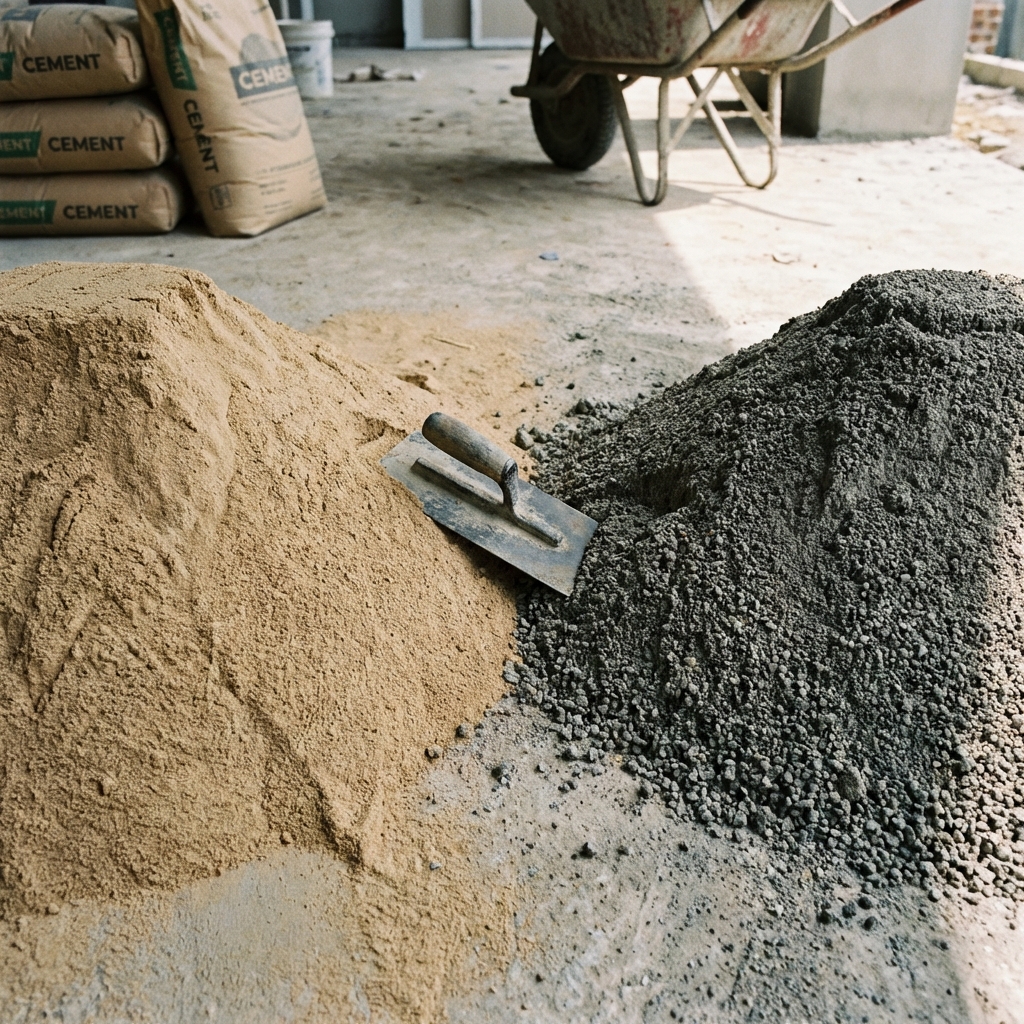
P-Sand is a finer grade intended for plastering. It gives a smoother surface, finishes with less effort and takes paint better. M-Sand is coarser and better suited to concrete, block laying and rough or first-coat work. Some contractors use M-Sand for the first coat and P-Sand for the finishing coat, which is a sensible way to save cost. Whichever you use, the sand should be clean, free of clay and silt, and screened to remove oversize grains. As a thumb rule a 1,000 sq ft RCC house needs about 5 to 6 units of P-Sand for plastering, though wall area and thickness change this.
Thickness for walls and ceilings
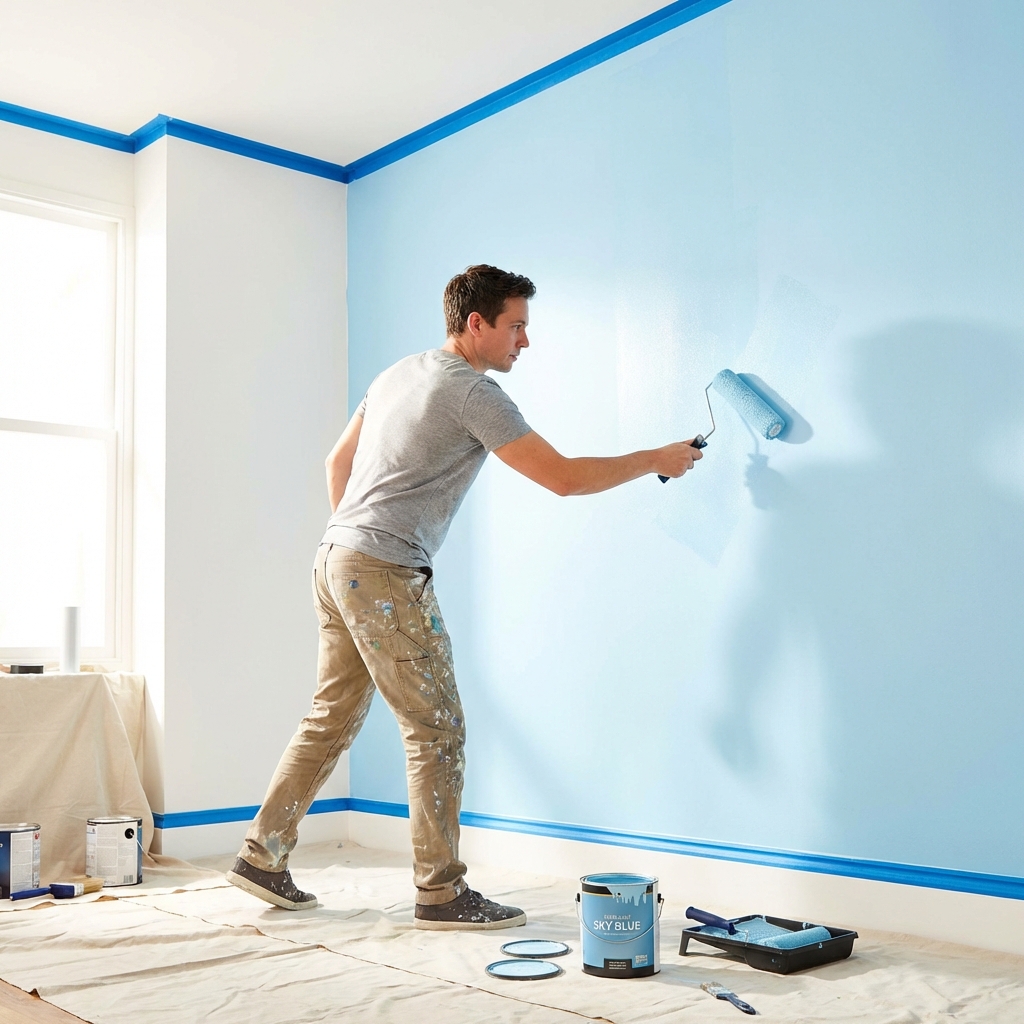
Commonly used thicknesses are about 12 mm for internal walls, 15 to 20 mm for external walls and about 6 to 10 mm for ceilings. Block walls laid accurately can take thinner coats, while uneven brickwork needs more. Plaster that is too thick tends to crack and sag, so when a wall needs more than about 20 mm to correct its line, apply it in two coats and let the first coat set. Follow your engineer's or site supervisor's specification where one is given. Use a straight edge and a plumb line to keep the surface true.
Mix ratios
Typical cement to sand ratios are around 1:4 or 1:5 for walls, with the richer 1:4 mix often chosen for external work, and around 1:3 for ceilings. A richer mix is not always better, because very rich plaster shrinks and cracks. The correct approach is the ratio your supervisor specifies, measured by volume with a fixed box and not by guesswork. Add only enough water to give a workable mix, since extra water causes shrinkage cracks. If the sand is damp, add less water. Use a measuring box for sand and a fixed bucket for cement, so every batch is the same.
Preparation and curing
Plaster sticks better to a prepared surface. Clean off dust, wet the wall lightly before plastering and roughen smooth concrete so the plaster can grip. Where block or brick meets a concrete beam or column, many builders fix a strip of mesh across the joint to reduce cracks. After the plaster sets, cure it by sprinkling water two or three times a day for about a week. Curing is the cheapest crack prevention available, and it is the step most often skipped. Do not apply plaster in strong direct sun without shading, because quick drying leaves hairline cracks.
Estimate your sand
Our construction material calculator includes an estimate of P-Sand for plastering, based on your built-up area. Check availability and rates on our building material rate checker before ordering. If your design has mostly block walls, you may need less plaster thickness than the thumb rule assumes, so your estimate can fall. For an overview of the two sands, see our comparison of P-Sand and M-Sand. We supply both black P-Sand and black M-Sand, and our building material rate checker lists current figures subject to availability and reconfirmation, so you can compare the cost of plastering with each sand before you decide. Ask your mason which approach he prefers, then match the order to it.
Conclusion
Use clean, fine P-Sand for plaster, keep coats within sensible thickness, measure the mix by volume and cure the wall properly. Those four habits do more for plaster quality than any extra cement. Order the sand for each stage close to the day the mason needs it, so it stays clean. Call or WhatsApp +91 76676 66264 for delivered rates.
Reviewed by the TKR team. See our editorial policy for how guides are written, checked and updated.