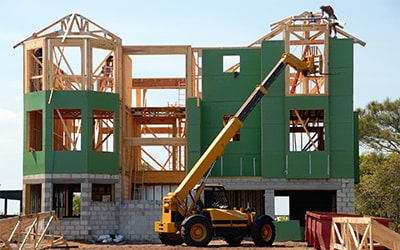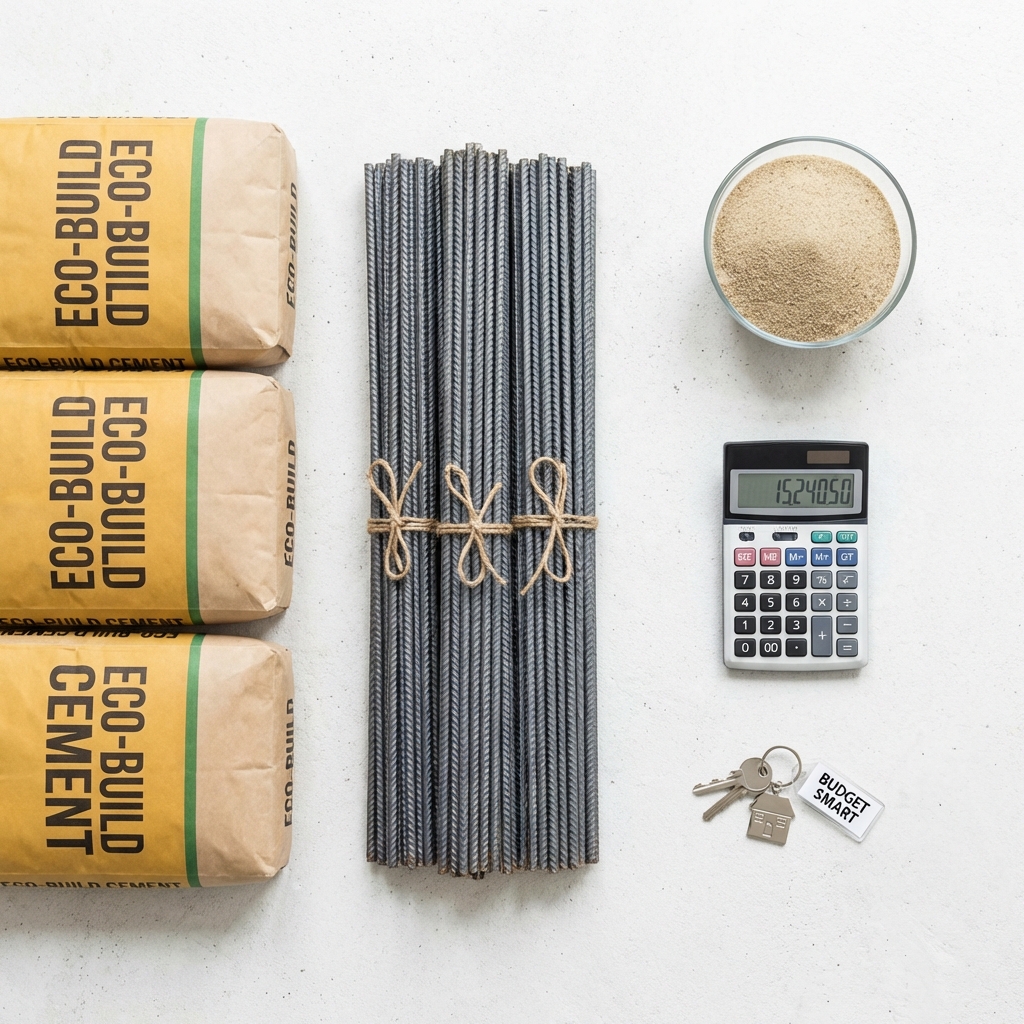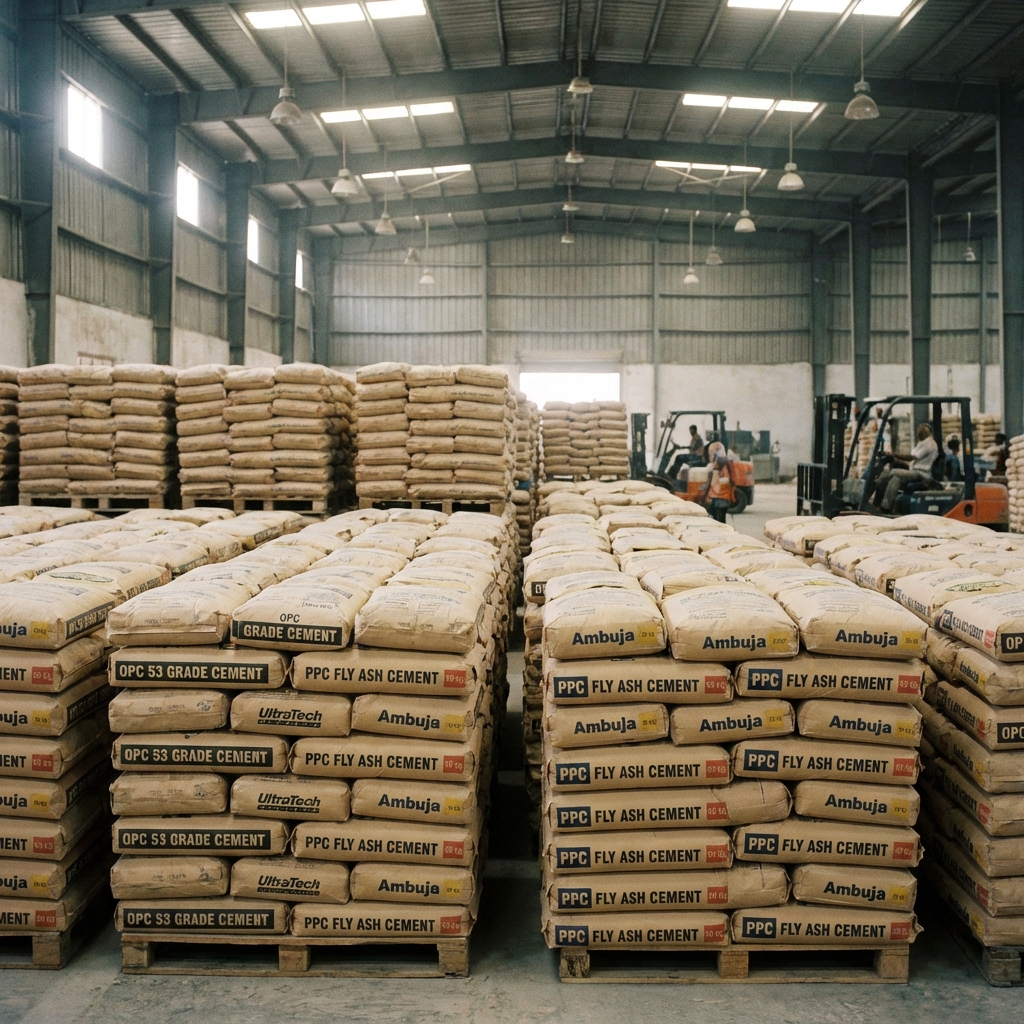
A 1,000 sq ft RCC house typically needs about 400 bags of 50 kg cement. Learn how to plan the quantity, buy in stages and keep cement dry through the Tamil Nadu monsoon.
The 400-bag thumb rule
For a 1,000 sq ft RCC house, builders commonly plan on about 400 bags of 50 kg cement, which is roughly 0.4 bag per square foot of built-up area and about 20 tonnes in total. The figure covers footings, columns, beams, the slab, masonry mortar and plastering. It is a planning number only. A second floor, deep footings, thick slabs or heavy plastering will raise it, and a simple single-storey plan with block walls may come in lower. Your engineer's estimate from the drawing is the quantity to order against.
How the quantity splits through the build
Cement is not used evenly. The heaviest demand comes during concreting of footings, columns, beams and the roof slab, with a second wave during block work and plastering. Knowing this lets you stage deliveries instead of stacking 400 bags on site for months. Buy for the next stage, not the whole house. Staged buying also protects you from rate changes in the other direction, and lets you change brand or grade between stages if your engineer recommends it. Ask for delivery just before each stage so the cement does not sit idle on site.
Why storage matters
Cement reacts with moisture, even humid air. Bags left in damp conditions begin to set partially, forming lumps, and the cement loses strength even when it still looks usable. In the Tamil Nadu monsoon, wet ground and driving rain are the main hazards. Spend a little effort on storage and you keep the strength you paid for. Spend nothing and you may be mixing weak cement into a structural pour. Even a short exposure to rain on an open stack can ruin the outer bags, so a tarpaulin alone is not enough without a dry base.
Store it the right way
Keep cement in a closed room or shed with a dry floor, away from outer walls. Stack bags on a raised platform of wooden planks or a plastic sheet over bricks, at least a few inches above the floor, and leave a gap of around six inches between the stack and any wall. Do not pile bags too high, with ten bags being a common limit, because the lower bags get compressed and harden. Cover the stack with a plastic sheet and close doors and windows. Use the oldest bags first, which is easy if you stack in rows by delivery date. Keep tools, wet sand and water containers away from the cement room.
Checking cement before you use it
Before mixing, check each bag. The bag should be intact and the cement should be loose and free-flowing. A few soft lumps that break between your fingers are tolerable in some cases, but hard lumps that do not crush mean the cement has partly set and should not go into structural work. Avoid using cement stored for several months, and check the manufacturing date printed on the bag. If you are unsure, ask your engineer. Hardened bags should be set aside and used only for non-structural filling if your engineer agrees.
Plan with the right tools
Use our construction material calculator to see the cement estimate for your area, and read our guide on choosing cement to compare grades. Check availability and brands with us before you fix your pour dates. If your site has no safe room, ask us to time deliveries closer to the pour so storage is short. Also remember that cement brands and prices change, so ask about current availability before each stage. Our rate checker page does not publish a fixed cement price, because rates change with brand and quantity, so a quick call is the fastest way to get a delivered figure for the bags you need and the date you need them.
Conclusion
Plan around 400 bags per 1,000 sq ft, buy in stages and keep every bag dry, raised and covered through the monsoon. Cement that is fresh and dry is cheaper than rework. Tell us your pour date and we will help you plan the quantity. We can also arrange staged delivery to match your work. Call or WhatsApp +91 76676 66264 for delivered rates.
Reviewed by the TKR team. See our editorial policy for how guides are written, checked and updated.